Viren und Bakterien
Bacteria
Diesen Artikel gibt es noch nicht auf Deutsch, er wird auf Englisch angezeigt.
Bacteria are microscopic, single-celled organisms and one of the most abundant and diverse life forms on Earth. Bacteria are everywhere within us and in our environment; including in the air, water environments, soil and inside other organisms such as plants and animals.

What are bacteria?
There are both good bacteria and bad bacteria that can make us sick. A bacterium reproduces by dividing itself. This is possible because as a single-celled organism, bacteria have their metabolism.
Many good bacteria help us break down indigestible substances. The vast majority of these are found in the gut and are part of the good bacterial flora in the body.
On the other hand, some bacteria can be pathogenic and cause diseases in humans and other organisms. Examples of pathogenic bacteria include Salmonella, Escherichia coli (E. coli), and Staphylococcus aureus (Staphylococcus).
Bacterial infections
Pathogenic bacteria can cause diseases in humans. When a bacterium causes disease, it is called a ‘bacterial infection’. When you become infected, your body usually responds with inflammation to defend itself. Examples of common bacterial infections are: strep throat, scarlet fever, erysipelas and impetigo. These infections are all caused by Streptococcus, which is a common bacterium.
Treatment for bacteria
In the vast majority of cases, a bacterial infection can be treated if detected in time. By far the most effective form of treatment is antibiotics.
Antibiotics
Antibiotics are medicines used to fight bacterial infections. They work by interfering with the growth and reproduction of the bacteria, leading to its death or inhibition of the infection. Different types of antibiotics are effective against different types of bacteria. Some common antibiotic groups are: penicillins, cephalosporins, tetracyclines, macrolides, quinolones, trimethoprim, and sulphonamides. It is important to use antibiotics as prescribed by the doctor and to take the full course of treatment to prevent the development of resistance.
Antibiotics and resistant bacteria
The problem with antibiotics is that bacteria can become resistant to them. If a bacterium becomes resistant to an antibiotic, that antibiotic no longer works, and the infection can become much harder to treat. This is something we want to avoid as harmless and easily cured diseases can become fatal in the future if we do not have a drug to cure the infection. To avoid bacteria developing resistance, it is very important that antibiotics are only prescribed when they are really needed.
How are bacteria spread?
Bacteria are all around us and, if we are unlucky, we can contract a pathogenic bacterium that can make us sick. These bacteria can then be spread and infect others. Bacteria can be spread in a variety of ways, the most common being through direct contact between people. This can include shaking hands, hugging, kissing or touching the skin or body fluids of an infected person.
To reduce the risk of spreading bacteria, the best thing you can do is to maintain good hygiene. Wash your hands often, cover your mouth when coughing and disinfect surfaces regularly.
Indirect contact
Bacteria can be spread through indirect contact with objects or surfaces that have become contaminated with bacteria. This can happen, for example, by touching infected door handles, toys, contaminated surfaces or contaminated food. When a person touches these objects and then touches their mouth, nose or eyes, the bacteria can spread and cause infection.
By wearing a face mask, you can protect others around you from your droplet infection. You can also use NOSA Microbial Control to reduce your exposure to viruses and bacteria.
Food and water
Some bacteria can be spread through contaminated food or water. If food is not handled or stored correctly, bacteria can grow and cause food poisoning when consumed. Bacteria can also contaminate water sources and cause waterborne infections.
Insects and pests
Some bacteria can be spread by insects such as mosquitoes and fleas. These transfer the bacteria from one infected individual to another.
Airborne droplets
When someone coughs, sneezes or speaks, tiny droplets containing bacteria (droplet infection) can be spread and then inhaled by people nearby which can lead to an infection.
Different types of bacteria
There is a great diversity of bacteria and some of them are harmful to us. When harmful, pathogenic bacteria enter our body, this causes an infection. However, the vast majority of infections are managed by the body without treatment. However, some infections require treatment with antibiotics.
In the worst cases, the infection can become so severe that it cannot be treated.
Below we describe some of the most common bacteria that cause infection.
Pneumococcus
Pneumococci are bacteria that cause bacterial respiratory infections such as pneumonia, ear infections and sinusitis. Anyone can contract pneumococcus, but children are the most common carriers of the bacterium and therefore the spread of infection is mainly among younger school children.
Pneumococcus is harmless for the vast majority of healthy people if treated with antibiotics in time. However, for the elderly, or people with compromised immune systems, vaccination is recommended to avoid severe illness and death.
Symptoms
The vast majority of people who carry pneumococcus do not know it because the symptoms are not always obvious. However, those who carry the bacteria and become ill with, for example, sinusitis or otitis may experience several symptoms.
Patients with ear infections often experience pain, fever and hearing loss. In pneumonia, symptoms such as difficulty breathing, coughing, chills, fever, dizziness and mucus formation are common. Symptoms of sinusitis can include facial pain, runny nose, loss of sense of smell and pain in the teeth and mouth. Many people also get a fever and feel generally tired.
NOSA microbial control has been tested against Streptococcus pneumoniae, with external lab tests showing that the product reduces the bacteria up to 99% on contact with the product.
E.coli
E.coli, or Escherichia coli, is a bacterium that can produce toxins in the gut and cause severe stomach pain, diarrhea, blood in stools or vomiting. The bacterium is found all over the world and is mainly associated with cattle that spread it via feces to other environments.
E.coli can survive in harsh environments and it takes very few bacteria to cause disease. People have become ill from everything from eating undercooked hamburgers to drinking unpasteurized milk. The bacteria can also be found on vegetables, salads and fruits that have most likely been contaminated during irrigation or fertilization.
E.coli can affect anyone and it can cause anything from mild to severe, serious symptoms. Common symptoms include stomach pain, diarrhea, blood in stools, vomiting and fever.
For some, E.coli can cause severe complications if not treated with antibiotics in time. In the worst case, the bacteria can affect the kidneys, requiring dialysis, intensive care and, in the worst case, causing death.
NOSA microbial control has been tested against Escherichia Coli, where external lab tests show that the product reduces the bacteria up to 99% upon contact with the product.
Staphylococcus
Staphylococcus is a bacterium that you can carry without any problems. However, it can also cause food poisoning and skin infections. If it enters the body, it can cause infections as serious as sepsis, or blood poisoning.
The most common reason for the bacteria to develop into an infection is if you have a disease or a wound on your body that the bacteria enter. Wound infections are difficult to heal and can make you seriously ill if not treated in time.
Staphylococci can also cause food poisoning if they get into food during cooking. Staphylococci in food can grow and form a toxin that can cause diarrhea, stomach cramps, nausea and vomiting.
If you have a wound on your body that is not healing, it may be because you have staphylococci in the wound. Common symptoms of a staph infection are redness, swelling and pain.
If you have ingested staphylococcus via food, you may suffer from food poisoning. Common symptoms of staphylococcal food poisoning are vomiting, stomach pain, diarrhea and nausea. However, they usually disappear within a few days.
NOSA microbial control has been tested against Staphylococcus Aureus (MRSA), where external lab tests show that the product reduces the bacteria up to 99% in contact with the product.
Viruses and bacteria
Viruses and bacteria have a lot in common. One of them is that they can cause severe disease in humans. However, there are some differences between the two, including that bacteria can reproduce themselves while viruses can only reproduce by infecting a host cell.
Unlike viruses, a bacterial infection can in many cases be cured with antibiotics. To counteract viruses, vaccines are used and in case of ongoing infection, antivirals are used to treat a disease.
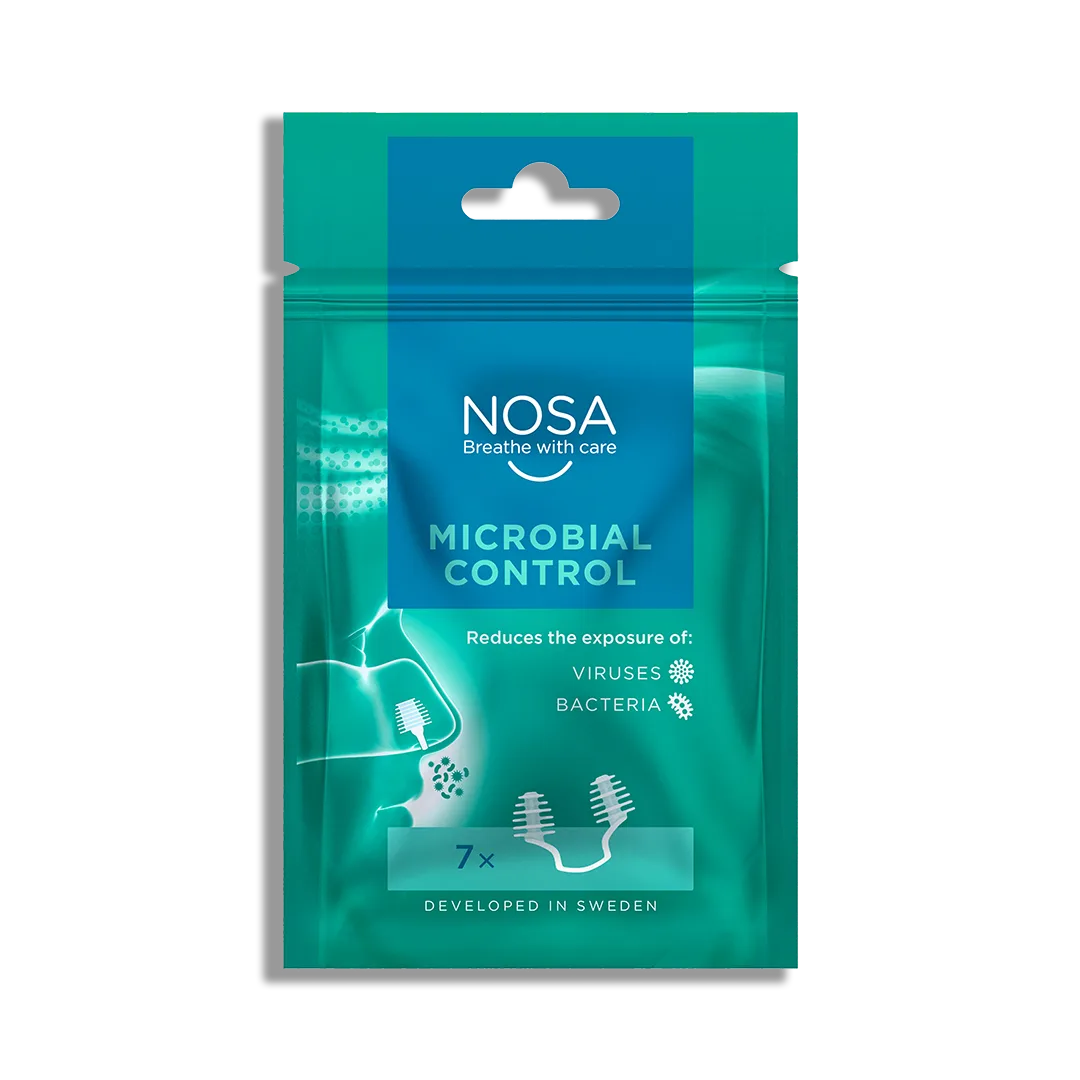 Passendes ProduktNOSA Microbial ControlReduziert die Exposition gegenüber Viren und Bakterien.