Olfato y entrenamiento olfativo
Loss of smell
Este artículo aún no está en español y se muestra en inglés.
Loss of smell is a medical term that describes the loss of the sense of smell.

Loss of smell can manifest in different states or conditions.This condition can be temporary or permanent and can affect a person’s ability to recognize and perceive different scents.
Various states of olfactory dysfunctions
Anosmia
Anosmia is the medical term for total loss of the sense of smell, meaning that a person cannot smell any odors at all. Anosmia can significantly affect a person’s quality of life as the sense of smell is linked to the sense of taste. Temporary Anosmia is a temporary loss of the sense of smell, often caused by factors such as colds, allergies, respiratory infections, or viruses (e.g. COVID-19). In most cases, the sense of smell returns once the underlying issue is resolved. Permanent Anosmia is a less common but long-lasting or irreversible loss of the sense of smell. This can result from conditions like nasal polyps, head injuries, or certain neurological diseases. The treatment of anosmia depends on its underlying cause and may include medical intervention, olfactory training, or rehabilitation of the sense of smell.
Hyposmia
Hyposmia is a medical term for having a weakened sense of smell, which means a person doesn’t pick up smells as well as what’s considered normal. People with hyposmia can still detect some odors, but they might not be as strong or clear as those with a regular sense of smell. This condition can last for a short time or be a lasting change, and it can be caused by things like colds, nasal polyps, allergies, head injuries, or certain neurological issues. The treatment of hyposmia depends on its underlying cause and may include olfactory training, or other rehabilitation methods to improve olfactory sensitivity.
Parosmia
Parosmia is the medical term for a disturbed sense of smell where smells are perceived as weird or unpleasant. A person with parosmia may still be able to smell, but these may be perceived as abnormal and sometimes unpleasant. For example, apple pie from the oven smells to most people as sweet and delicious. But for people with parosmia the pie might smell unpleasant and rotten. People often describe these distorted smells as similar to chemicals, burning, feces, rotting meat, or mold. Parosmia can be triggered by specific smells or almost any scent and can range from mild to severe. This disorder can have a significant impact on the individual’s quality of life and can require parosmia treatment, medical follow-up, and management to facilitate recovery.
Phantosmia
Phantosmia, also called olfactory hallucinations or phantom smells, happens when a person senses smells even when there’s no actual odor around. It’s like detecting scents that aren’t present. These imagined smells can be ordinary or strange, like thinking you smell garlic when there’s no garlic nearby. Experiencing phantosmia can be confusing and concerning for those going through it. It’s important to know that these imagined smells have no connection to anything real, making it a challenging and sometimes scary experience for those affected.
Causes of loss of smell
Causes of loss of sense of smell can be due to many different factors, listed below are some of the most common ones.

Loss of smell – Covid
During the COVID-19 pandemic, temporary anosmia and parosmia after COVID-19 have been some of the reported symptoms in those infected by the virus. According to research, about half of all people with COVID-19 have reported some form of loss of smell, including anosmia, although most cases are temporary and improve over time.
A common consequence of cold symptoms can be an impaired sense of smell. Colds can lead to swelling and irritation of the nasal mucosa, which affects odor receptors and can result in a temporary loss of smell. Many people can experience a gradual recovery of their sense of smell as the cold subsides. However, for some, the loss of smell can be long-lasting, known as post-viral loss of smell.
Medical reasons
Hormonal imbalances and neurological diseases like Alzheimer’s and Parkinson’s can impact the sense of smell by causing damage to the mucous membranes in the nose or the parts of the brain that control smell. Additionally, certain medications, such as some used in cancer treatments and nasal sprays for allergies, can harm the olfactory receptors or irritate the mucous membranes in the nose, resulting in a reduced ability to smell.
Injuries & trauma
Head injuries and trauma involving the head and nasal area can have a significant impact on the sense of smell. Injuries can lead to damage to nasal cartilage, mucous membranes, and smell receptors. This damage may block the flow of air, preventing scent molecules from reaching the olfactory cells located high up in the nose. Direct trauma to the head can also harm the parts of the brain responsible for processing olfactory information, causing inflammation that interferes with its ability to interpret scent signals
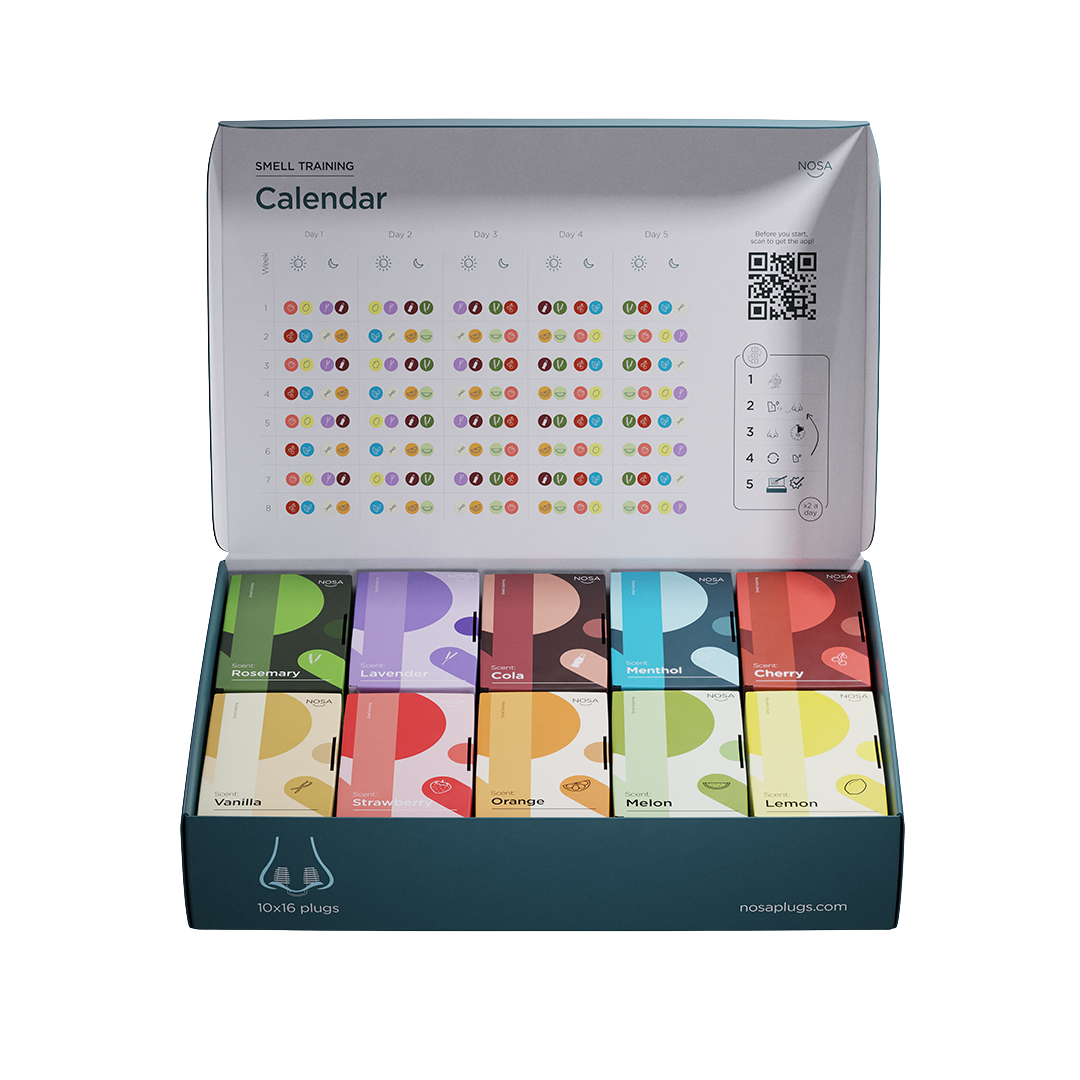 Producto relacionadoNOSA Smell TrainingEntrena cuando quieras, donde quieras.