Products for professionals
NOSA microbial control
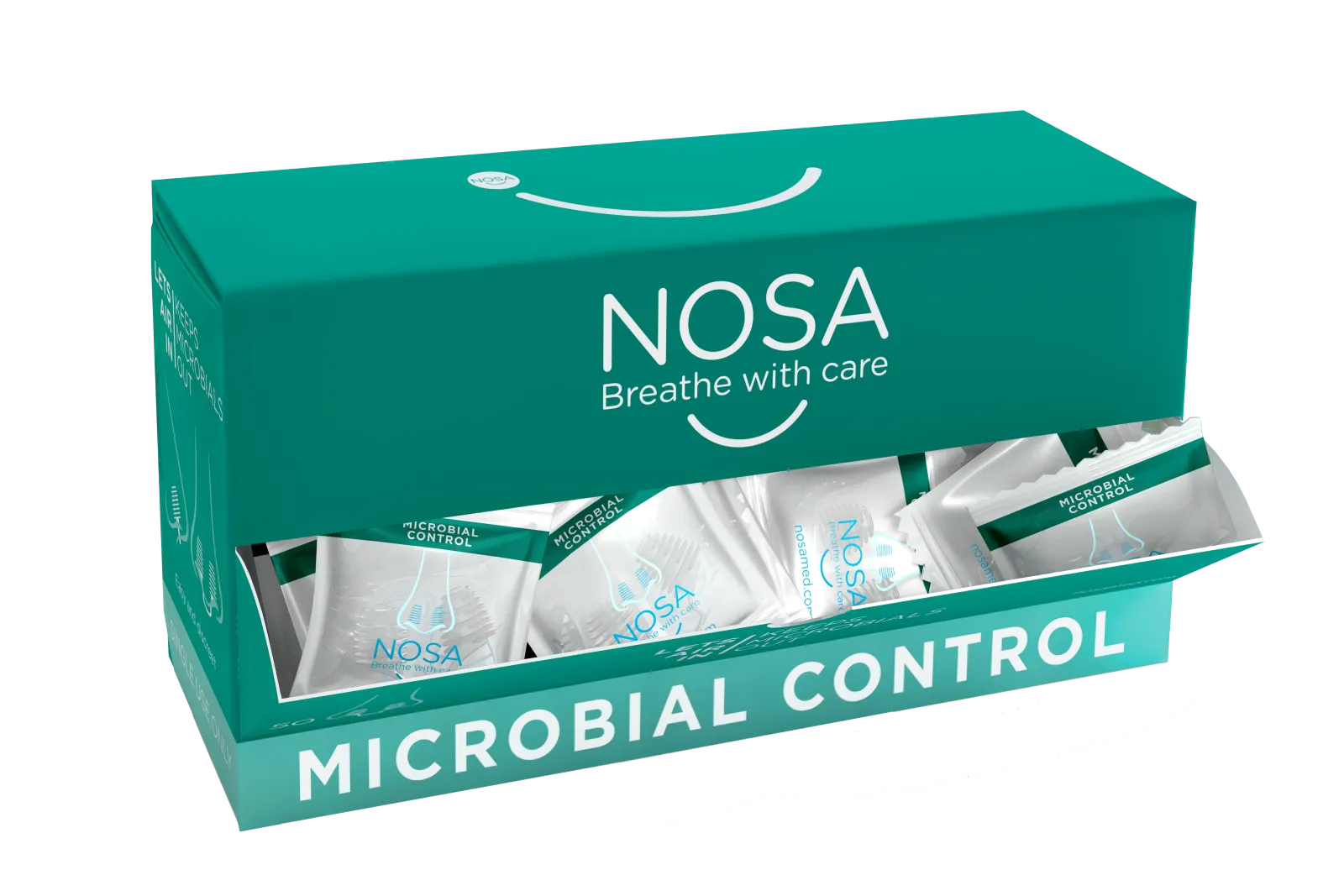
NOSA microbial control is designed to reduce the exposure to viruses and bacteria by inhalation through the nose. A reduced exposure to viruses and bacteria reduces the risk of respiratory infections. The product is easy to breathe through, discreet and comfortable to wear.
NOSA Microbial Control is a CE-marked Class I medical device available in Europe. In external laboratory tests, it reduced tested viruses – SARS-CoV-2, rhinovirus and norovirus – by up to 93% and tested bacteria – Staphylococcus aureus (MRSA), pneumococci and E. coli – by up to 99% on contact with the product.
Available in 50 pack.
Reduces the exposure to viruses and bacteria
up to
93%
viral reduction
- Coronavirus
- Rhinovirus
- Norovirus
up to
99%
bacterial reduction
- Staphylococcus including MRSA
- Pneumococcus
- E. coli
Unique design
Years of product development resulted in a patented design that:
- Reduces exposure to viruses and bacteria
- Designed to be easy to breathe through
- Designed for comfort and discretion
- Patented lamella design
- Can be used for up to 8 hours
How does NOSA microbial control work?
NOSA microbial control is placed in the nostrils so that you can breathe through the product. The product design forces the air to pass through the lamella structure of the device where it inactivates viruses and kills bacteria that get in contact with the product. This is made possible due to the silver phosphate particles infused into the material.
That way, the device reduces the amount of viruses and bacteria that enters the upper respiratory system. NOSA microbial control is a medical device class I and is available in Europe.
Why is it important to protect the nose?
Inside the nose is a sensitive area called the mucous membrane. Viruses and bacteria can enter the body and infect humans through this area. A reduced exposure to viruses and bacteria in the nose has been shown to reduce the risk of respiratory infections. NOSA microbial control is tested against many of the most common flu viruses.
The latest research shows that there are two types of cells inside the nose that are the likely entry point for COVID-19. These cells work as “viral entry receptors” and are highly accessible to the coronavirus because of the location in the nose.¹
References
Sungnak W. et al. SARS-CoV-2 entry factors are highly expressed in nasal epithelial cells together with innate immune genes. Nature Medicine 26, 681–687 (2020).